
Sermon Devotional: For Unto Us A Child Is Born
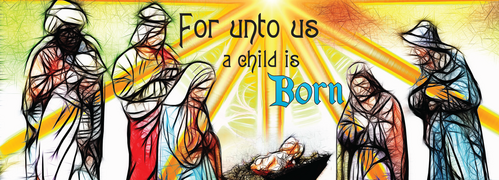
Sermon Title: For Unto Us A Child Is Born
Scripture: Isaiah 9:1-7 (ESV)For unto us a Child is born, unto us a Son is given; And the government will be upon His shoulder. And His name will be called Wonderful, Counselor, Mighty God, Everlasting Father, Prince of Peace. Isaiah 9:6
Our passage today was written around 735 B.C. in ancient Judah during a period of dire existential threats. The prophet Isaiah was speaking to Judah, the southern kingdom of Israel. Within Judah and its northern neighbor, Israel, the old faith was losing its appeal as local people turned to the religious customs of their neighbors. Externally, the mighty shadow of Assyria loomed large across the landscape, and in fact, would sweep violently into the region within the next decade.
Judah was at the time engulfed in a regional war we know today as the Syro-Ephraimite War. King Rezin of Aram (Syria) joined with the northern tribes of Israel (“Ephraim”) in a wild attempt to neutralize the Assyrian threat. Unlike its neighbors, Judah had retained its independence, and King Jotham of Judah (750-732 B.C.) refused to join the coalition. Trying to force cooperation, Kings Rezin and Pekah son of Remaliah marched against Judah, now led by Jotham’s wicked son, King Ahaz (732-715 B.C.).
Surrounded on all sides and with Jerusalem under siege, a desperate King Ahaz met with our narrator, the prophet Isaiah. Isaiah advised Ahaz not to be afraid of “these two smoldering stubs of firewood” (7:4) and commanded him to ask the Lord for a sign. When the faithless king refused, Isaiah provided one for him: “Therefore, the Lord himself will give you a sign: The virgin will conceive and give birth to a son and call him Immanuel” (7:14).
Immanuel means “God with us.” A prophecy of a momentous birth heralding a hopeful, divinely sanctioned future during a period of fear and darkness was not unusual at the time. Many thought the child Isaiah referred to was Ahaz’s son, Hezekiah. Unfortunately, Hezekiah as a king did not live up to the leadership traits Isaiah described (“Wonderful Counselor,” “Mighty God,” Everlasting Father,” Prince of Peace”). He was eventually disqualified, and Isaiah’s prophecy retained its opening for fulfillment. Jesus, many centuries later, was the one who successfully fulfilled all these ancient promises from Isaiah.
King Ahaz had no way of knowing this, and it is doubtful that he would have been interested even if he had. Despite the prophetic meeting with Isaiah, King Ahaz is not recorded as seeking Yahweh’s will in any other way. Instead, he made the logical bet and sent treasure from the temple in Jerusalem to the Assyrian king Tiglath-Pileser in a plea for military aid.
This single decision played out over two generations and hastened the near total destruction of three nations. Syria was the first to be demolished by Assyria, with its inhabitants killed, scattered, and later replaced. Israel fell soon after; the ten tribes were deported and dissolved into the Assyrian empire, their unique identity effectively lost to history. While Judah was somewhat spared as a vassal state, its downfall was merely postponed: in 701 B.C., when Ahaz’s son King Hezekiah refused to pay tribute to Sennacherib, the brutal Assyrian king swept into Judah, destroyed 46 cities, and deported about 200,000 (90 percent) of its inhabitants.
Our true character is revealed when we are under pressure. King Ahaz made the logical choice to ally himself with the most powerful nation in the region, but in doing so, he acted in fear and ignored godly counsel. The consequences of his choice were far-reaching, affecting many people and altering the course of history. What would have happened if he had chosen courage over fear, asked for a sign from the Lord, and committed his way to God? We cannot possibly know, and yet we know that that is always the better path. This Christmas season, as we celebrate the ultimate fulfillment of Isaiah’s prophecies about the child who was born, may our steps be faithful and our hearts guided by the Holy Spirit.
Consider –
╬ Can you think of a time when you were under pressure from all sides? What did faith look like in that situation?
╬ Can you think of a time when you were under pressure from all sides? What did faith look like in that situation?
╬ King Ahaz was a wicked king. He was weak and cowardly. He assimilated to the culture around him to the point of sacrificing at least one of his infant sons to Molech in a gruesome manner. Ahaz’s father was a good king, and yet Ahaz departed radically from this pious example. Can you think of a faithful brother or sister whose child or grandchild has left the faith? How can you support these families? Pray for the Spirit’s work in their hearts and minds.
╬ Lord, the long horizon of your purposes can be difficult to comprehend. Like the people of Judah in the time of King Ahaz, we can be blinded by our temporal concerns. Thank you that you always keep your promises. Thank you for sending Jesus. May our hearts and minds be renewed this Advent season! In Jesus’ name we pray. Amen.
Posted in Sermon Devotional
Posted in For Unto Us A Child Is Born, Advent, Isaiah 9, Ellyn Schwaiger
Posted in For Unto Us A Child Is Born, Advent, Isaiah 9, Ellyn Schwaiger